 By Upload Article Team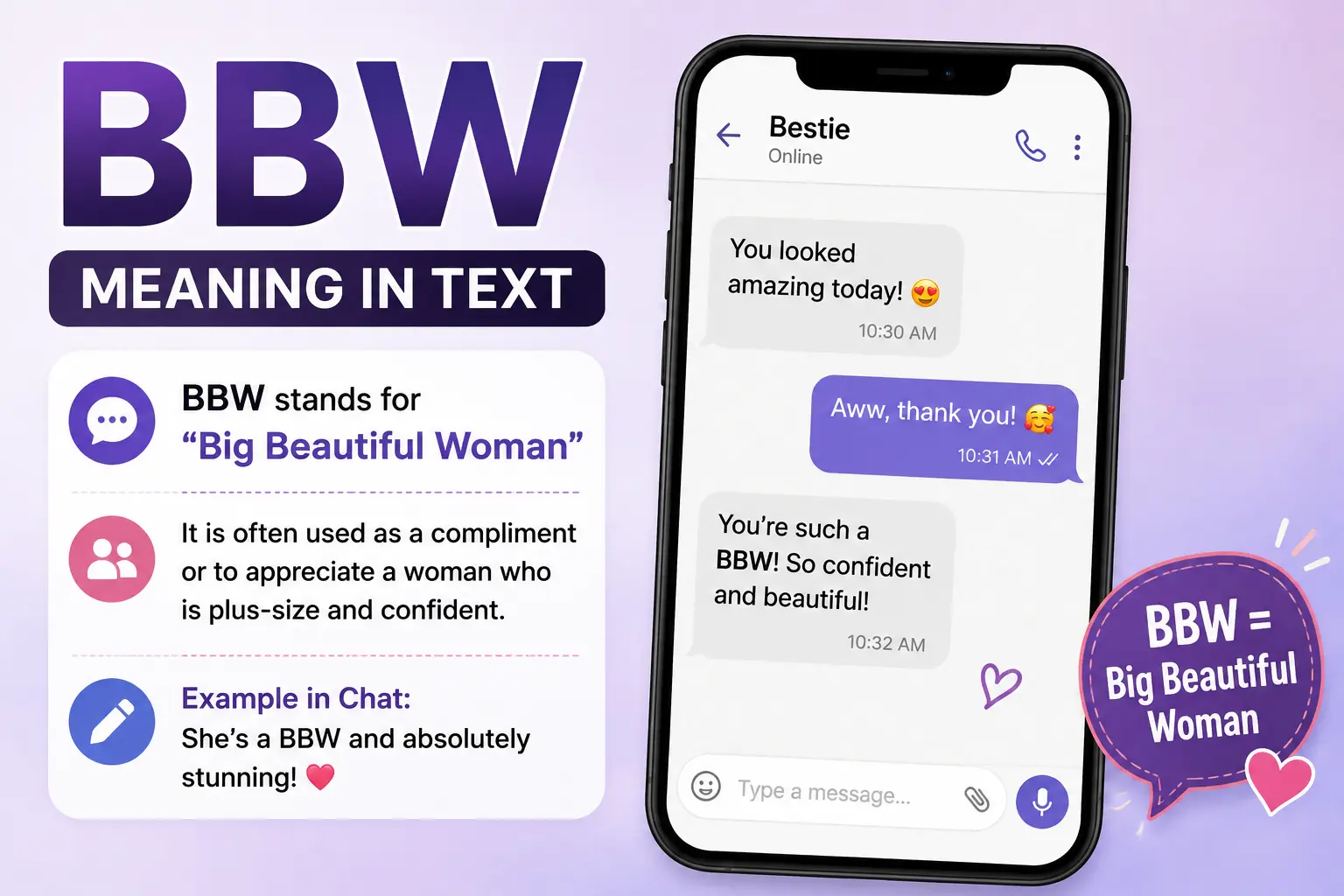
You may have seen the letters “BBW” online, on a dating profile, in a comment, or in a caption, and wondered what it actually stands for.
The BBW meaning is simple: it stands for “Big Beautiful Woman.” It is a term often used to describe larger-bodied women in a way that is meant to be positive, though how it lands can depend a lot on tone, context, and who is using it.
This guide is for anyone who wants a clear, respectful explanation of BBW, where it comes from, how it is used today, and how to think about it thoughtfully, whether you are reading it, writing it, or just curious about its place in modern language.
BBW stands for “Big Beautiful Woman.” It is generally used as a body-positive term describing larger-bodied women, often appearing on dating profiles, social media, and body-positivity spaces. Whether it feels respectful or not usually depends on tone, intent, and the relationship between the people using it.
Table of Contents
What Does BBW Mean?
BBW stands for “Big Beautiful Woman.”
It is generally used to describe a woman with a larger body, often within body-positive spaces, dating contexts, or general social media conversations.
The key word here is “beautiful.” Unlike some older, more negative terms used to describe larger bodies, BBW was created and adopted specifically to sound affirming rather than critical.
The Basic Definition
At its core, BBW is simply a descriptive label. It does not refer to one specific body size, but is generally associated with women whose body size is above what is traditionally considered “average” in mainstream media and fashion.
Where the Term Came From
BBW became widely recognized through body-positive movements and communities that pushed back against narrow beauty standards.
Over time, the term spread from print media and community spaces into online conversations, becoming especially common on social media and dating platforms as more people began openly discussing body diversity and self-acceptance.
Language like this tends to evolve alongside broader social conversations. As body positivity movements grew, so did public familiarity with terms like BBW.
Read More: MYF Meaning in Text: A Simple Guide to This Chat Abbreviation
How BBW Is Used Today
Today, BBW shows up across a few main types of spaces:
Dating Profiles and Apps
Some users include BBW in a bio or search filter to describe their own body type or to indicate a preference, similar to how people describe height, style, or other traits.
Social Media Captions and Hashtags
BBW is sometimes used as a hashtag within body-positivity communities, often paired with messages about confidence and self-acceptance.
Everyday Conversations
In casual texting or comments, BBW may appear as a quick way to reference body type, often within a compliment or supportive comment.
BBW in Text and Casual Conversations
Like most short terms, BBW can appear in very different tones depending on context.
Example: Friendly Conversation
Friend 1: “I finally posted that beach photo.” Friend 2: “You look amazing, total BBW confidence.”
Here, BBW is used supportively, tied closely to a compliment.
Example: Compliment
Comment: “Love this outfit, BBW style done right.”
In this case, BBW is used to highlight fashion confidence rather than focusing only on body size.
Example: Awkward Usage
Message: “Are you a BBW?”
Sent out of nowhere, without context or relationship, this kind of message can feel intrusive or reductive, even if the term itself is meant to be positive.
Read More: FW Full Form in Chat: A Simple Guide to What It Really Means
Is BBW Offensive or Respectful?
This is one of the most searched questions about the term, and the honest answer is that it depends.
BBW was created as a positive alternative to more negative body-related language, so on its own, it is not inherently offensive. However, tone, context, and intent play a huge role in how it is received.
When the Term Can Feel Respectful
- When used within body-positive communities as a form of self-expression
- When used as part of a genuine compliment
- When a person uses it to describe themselves
When the Term Can Feel Offensive
- When used as an unsolicited label toward a stranger
- When used to reduce someone to their body size alone
- When used with a mocking or sarcastic tone
Positive Uses of the BBW Label
Some common positive uses include:
- Self-identification within body-positive spaces
- Supportive captions celebrating confidence
- Fashion and style content aimed at larger-bodied audiences
These uses generally center around empowerment rather than judgment.
When BBW Becomes Problematic
Unsolicited Comments
Using BBW toward someone who has not invited body-related comments can feel intrusive, even if meant as a compliment.
Objectification
If BBW is used in a way that reduces a person to only their body type, rather than acknowledging them as a whole person, it can feel disrespectful.
Professional Environments
BBW is casual, informal language. It does not belong in professional settings, workplace conversations, or formal writing of any kind.
Why People Search “What Does BBW Mean?”
Many people search this term simply because they saw it online and were unfamiliar with it, especially younger users or people newer to social media and dating app terminology. Understanding the term helps avoid confusion and supports more respectful, informed conversations about body language online.
Polite Alternatives to BBW
If you are looking for more neutral or universally comfortable language, consider these alternatives:
Neutral Descriptive Alternatives
- “Plus-size”
- “Curvy”
- “Larger-bodied”
Compliment-Focused Alternatives
- “You look great.”
- “Love your style.”
- “You’re glowing.”
These alternatives focus on confidence and appearance without leaning on a body-size label at all.
Inclusive Language for Body Types
Inclusive language generally focuses on the person first, rather than leading with a body descriptor.
Example Comparison
- Less inclusive: “She’s a BBW.”
- More inclusive: “She’s confident and stylish.”
This small shift keeps the focus on the person as a whole, rather than centering the conversation around body size alone.
Common Mistakes People Make With This Term
- Using it without context. Sending BBW as a message to a stranger can feel jarring or inappropriate.
- Assuming it’s always a compliment. Tone and relationship matter just as much as the word itself.
- Using it in professional spaces. This term is casual and does not fit formal communication.
- Reducing someone to the label. Referring to someone only as their body type, rather than as a full person, can feel objectifying.
Frequently Asked Questions
What does BBW mean in text? BBW stands for “Big Beautiful Woman,” generally used to describe a larger-bodied woman in a body-positive way.
What does BBW mean on dating apps? On dating platforms, BBW is sometimes used in a bio or preference setting to describe body type, similar to other descriptive traits.
Is BBW offensive? Not inherently. It was created as a positive alternative to more negative body language, though tone and context strongly affect how it is received.
Is BBW commonly used on social media? Yes, especially within body-positivity communities, where it often appears in captions or hashtags tied to confidence and self-acceptance.
Can I use BBW to describe someone else? It is generally safer to let people describe themselves. Using body-related labels unprompted toward others can come across as intrusive.
What are polite alternatives to BBW? Neutral terms like “plus-size” or “curvy,” or simple compliments that avoid body-size labels altogether, are considered more universally comfortable.
Why do people search what BBW means? Many people simply encounter the term online and want a clear, respectful explanation, especially since its meaning is not obvious from the letters alone.
Is BBW appropriate to use in professional settings? No, it is casual, informal language and does not fit workplace or formal communication.
Final Thoughts
The BBW meaning comes down to a straightforward phrase, “Big Beautiful Woman,” created to offer a more affirming way to describe body size. Still, like most body-related language, its impact depends heavily on tone, context, and respect for the person it describes.
When in doubt, focusing on genuine, person-first language, rather than leading with any body-size label, is almost always the safer and more respectful choice.